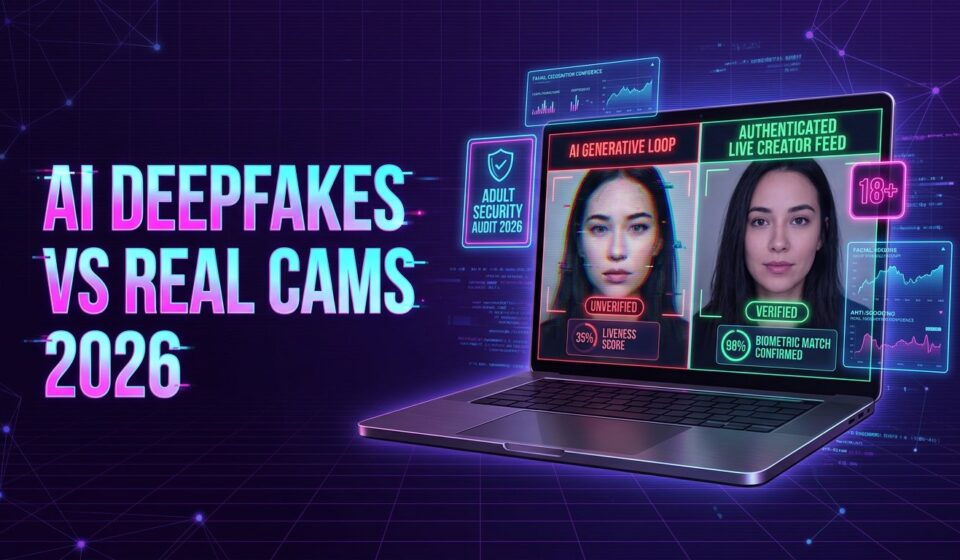
AI Deepfakes vs. Real Cams: How to Never Get Scammed by Virtual Webcam Injection in 2026

? Table of Contents
- The 2026 Scam Landscape: Why AI Deepfakes Are Flooding Roulette
- Quick Comparison Table: Real Live Cams vs. AI Deepfake Loops
- The 5-Second Visual Verification: 3 Tests to Spot a Fake
- How Virtual Webcam Injection Works Over WebRTC
- Platform Defense: Why Biometric Verification Protects You
- Frequently Asked Questions (FAQ)
- Final Verdict: Staying Safe on Verified Networks in 2026
There is nothing more unsettling in 2026 than spending ten minutes engaging in intense, flirty conversation on an unmoderated random video chat site, only to realize you have been talking to an automated script. While online chat has always had its share of text-based spam bots, the explosive evolution of generative artificial intelligence and real-time face-swapping algorithms has elevated digital deception to an entirely new level. Today, scammers routinely deploy ai deepfakes random video chat profiles that look and sound remarkably like real human beings.
These sophisticated scams rely on virtual webcam injection—a technique where third-party software feeds prerecorded explicit loops or real-time AI avatars directly into browser camera channels. If you don’t know what visual artifacts to look for, you risk falling into extortion traps or wasting tokens on fraudulent profiles, a contrast highlighted in many first-time user experiences with verified cams.
I spent the past month analyzing the technical signatures of AI deepfakes across public video roulette queues. Here is our independent cybersecurity guide on how virtual webcam injection works in 2026, and the exact visual tests you must perform to guarantee your chat partner is 100% real.
The 2026 Scam Landscape: Why AI Deepfakes Are Flooding Roulette
The proliferation of AI face-swapping tools on free video roulette sites is primarily an economic and criminal calculation. On unmoderated peer-to-peer networks, scammers can run dozens of automated browser instances simultaneously from a single server. By mapping an attractive AI-generated digital mask onto a recorded video loop, criminal syndicates automate their social engineering pipelines at scale.
According to comprehensive Kaspersky cybersecurity deepfake threat analysis, these virtual profiles serve three primary illicit functions:
- Automated Sextortion Bait: An AI avatar lures unsuspecting victims into compromising webcam positions while an automated background script records the screen and scrapes the victim’s residential IP address.
- Phishing & Malware Funnels: Once a conversational hook is established, the virtual profile directs the user toward fraudulent external links claiming to host “private full-length shows” or premium content galleries.
- Token Farming Scams: On poorly regulated tipping sites, automated scripts use virtual cam injection to mimic live performers, siphoning micro-transactions from users who believe they are interacting with a real creator.
Quick Comparison Table: Real Live Cams vs. AI Deepfake Loops
| Technical Signature | Authentic Live Creator Feed | AI Deepfake / Virtual Injection Loop | Detection Difficulty |
|---|---|---|---|
| 1. Facial Occlusion | Hand passing over face casts natural shadow | Digital mask tears, warps, or glitches around fingers | Easy (Instant visual proof) |
| 2. Eye Catchlight | Pupils reflect monitor screen & room lighting | Static, painted-on pupil highlights that never move | Medium (Requires HD video clarity) |
| 3. Blinking Rhythm | Natural, irregular blinking every 3–8 seconds | Either zero blinking or unnatural mechanical flutters | Easy (Obvious within 15 seconds) |
| 4. Lip-Sync Latency | Exact vocal alignment with mouth movements | Slight 100ms delay between jaw motion and speech | Medium (Can be confused with lag) |
| 5. Frame Repetition | Continuous unique micro-movements & breathing | Identical 30-second background loop resets exactly | Easy (Watch background objects) |
The 5-Second Visual Verification: 3 Tests to Spot a Fake
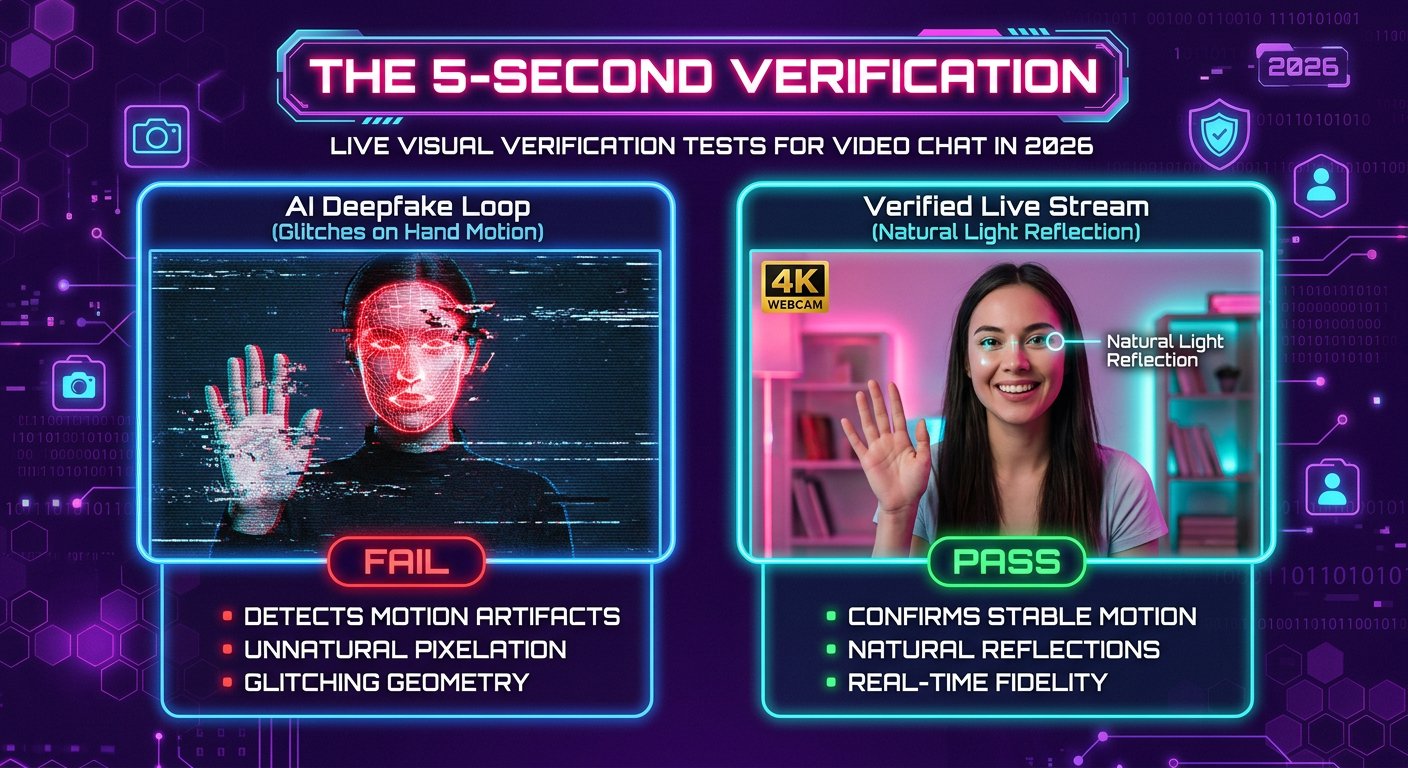
You do not need specialized forensic software to expose an AI face-swap during a live chat session. While neural networks can generate photorealistic static facial textures, they struggle immensely with real-time physics, occlusion, and dynamic lighting changes. To understand how real human chemistry differs from automated behavior, compare these patterns against how authentic cam2cam reactions differ from prerecorded loops.
Whenever you suspect a profile might be an AI deepfake or a virtual injection loop, casually initiate one of these three visual challenges:
1. The Facial Occlusion Hand Wave
The single Achilles’ heel of real-time deepfake software in 2026 is facial occlusion. Ask your chat partner to perform a natural, playful hand gesture directly across their face—such as brushing hair off their forehead, adjusting glasses, or touching their nose. When physical fingers cross in front of a deepfake overlay, the AI loses track of facial landmarks. You will witness the digital mask flicker, distort around the fingers, or momentarily tear away to reveal the true face underneath.
2. The Pupil Catchlight & Lighting Shift
Real human eyes act as curved mirrors, reflecting ambient monitor brightness and room lighting. If you ask a live creator to change their screen color or turn on a desk lamp, the catchlight in their pupils will immediately shift in intensity and hue. AI avatars generate static, painted-on pupil reflections that remain entirely frozen regardless of external lighting changes.
3. Micro-Latency in Audio Synchronization
Real-time deepfake rendering requires heavy GPU computational processing. This processing overhead frequently introduces a micro-delay of 100 to 200 milliseconds between vocal audio and jaw articulation. If a user’s lips finish moving slightly after the spoken words reach your speakers, you are likely watching an artificial neural rendering.
How Virtual Webcam Injection Works Over WebRTC
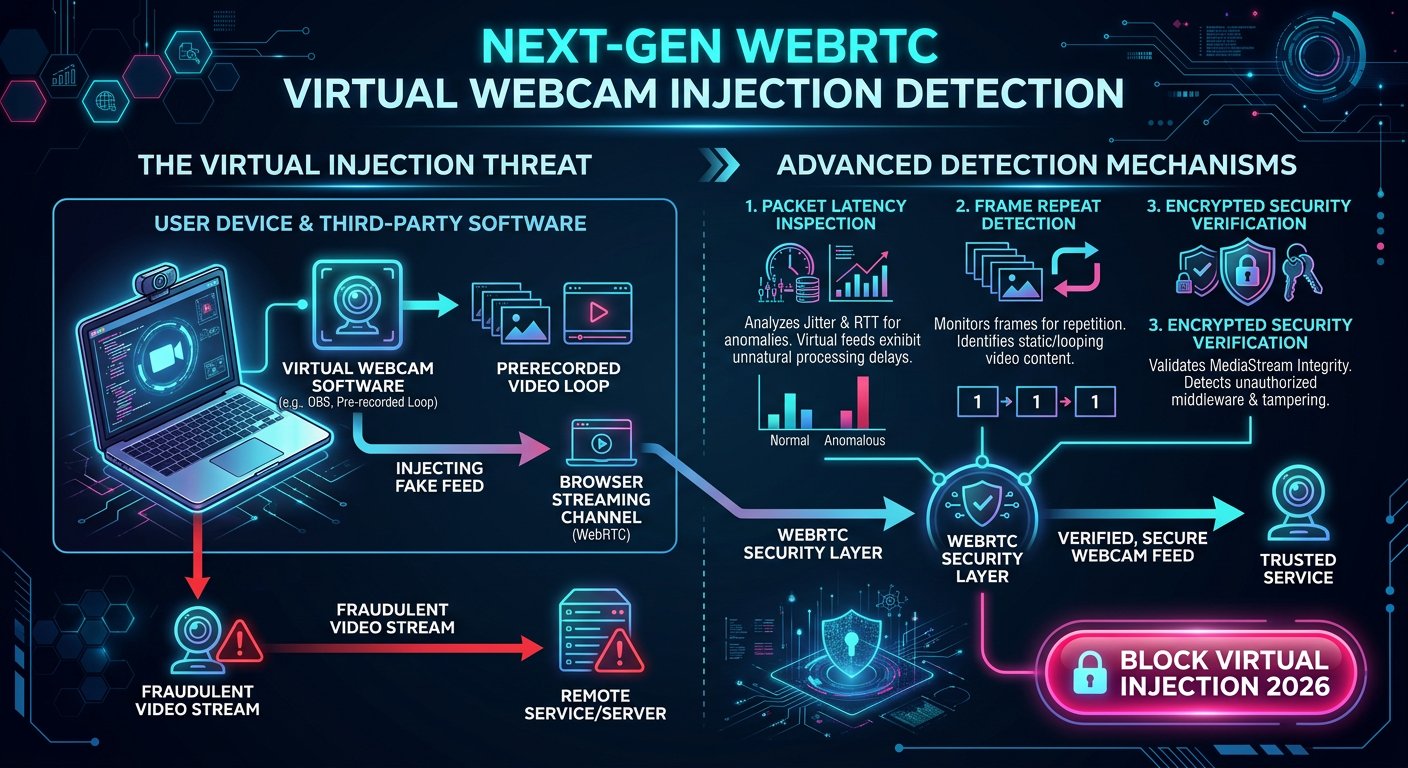
Not every fake profile relies on AI face-swapping; many classic scams utilize virtual webcam injection. In a standard browser session, WebRTC protocols pull video directly from a physical USB or integrated laptop camera hardware. Scammers bypass this by installing virtual camera drivers (such as OBS Virtual Camera or customized SplitCam routing scripts).
When the browser requests camera access, the virtual driver feeds a stolen, high-definition video loop into the WebRTC stream. To the untrained eye, the broadcast looks pristine. However, understanding the reality of adult video chat security reveals two technical giveaways:
- Zero Sensor Noise: Physical webcams operating in normal room lighting always display microscopic digital grain or sensor noise in dark background areas. Prerecorded virtual loops that have been ripped and compressed often display unnaturally smooth, artifact-heavy dark zones.
- Exact Loop Repetition: Watch background objects—a ceiling fan, a ticking clock, or a shadow moving across a curtain. Virtual injection scripts typically rely on 30-second to 60-second video loops that repeat identically endlessly.
Platform Defense: Why Biometric Verification Protects You
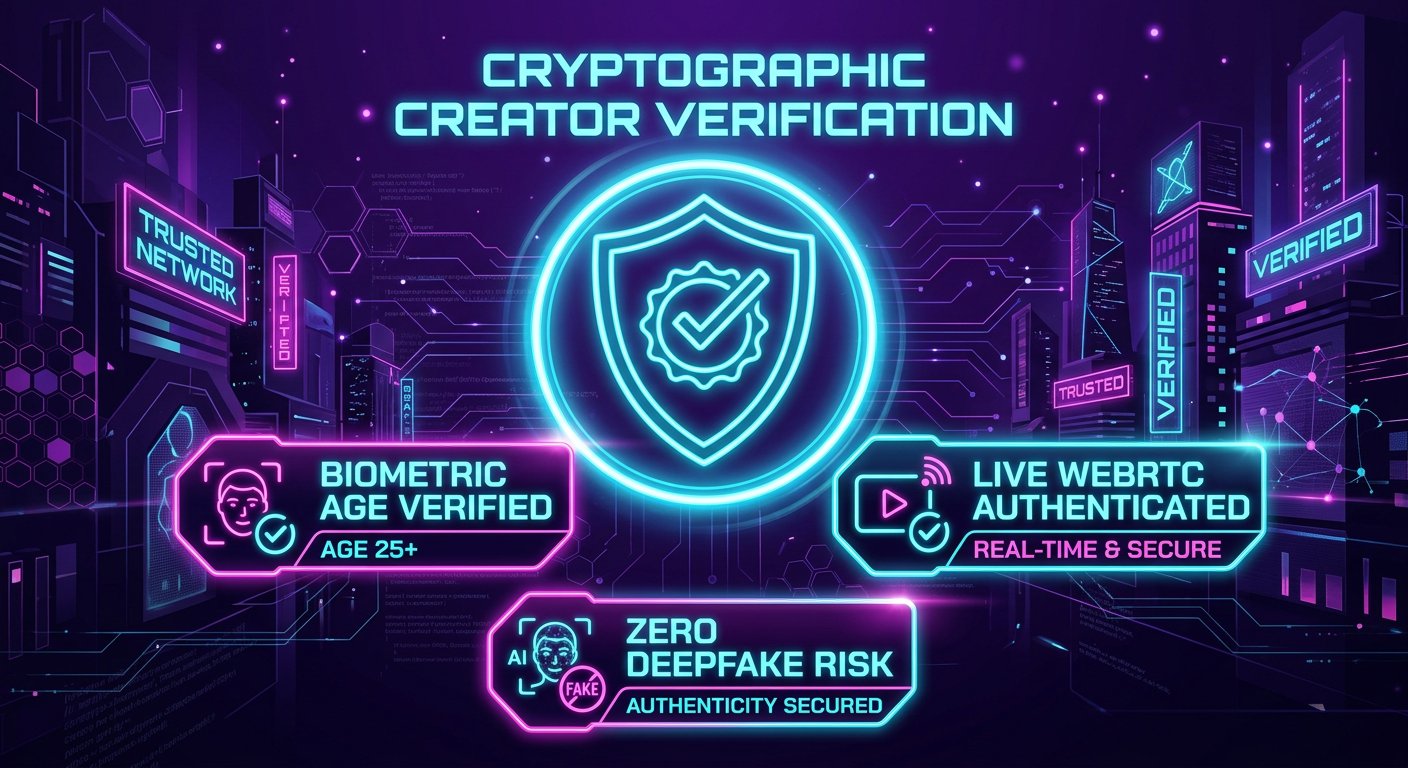
While manual verification challenges are effective, the burden of security should not fall entirely on the user. The most significant divergence in the 2026 video chat industry is how platforms protect their communities against automated digital fraud, an effort supported by global Europol digital fraud prevention guidelines.
Free, unmoderated roulette apps lack the infrastructure to inspect virtual camera drivers or run biometric checks, allowing deepfakes to thrive. In contrast, premier adult networks invest heavily in multi-layered creator authentication:
- Biometric Liveness Scanning: During account onboarding, creators must complete real-time 3D facial liveness checks that detect skin texture, sub-surface light scattering, and depth geometry, blocking AI overlays instantly.
- Hardware Driver Attestation: Secure WebRTC streaming clients query browser APIs to verify that the video stream originates from a signed, physical camera sensor rather than a virtual software routing driver.
- Cryptographic Watermarking: Verified broadcasts embed invisible cryptographic timestamps into the video stream, certifying that the footage is live, authentic, and unmodified by third-party scripts.
Frequently Asked Questions (FAQ)
How can I instantly tell if a webcam stream is an AI deepfake?
Ask your chat partner to perform an irregular hand movement near their face, such as waving an open palm across their eyes or touching their nose. Real-time AI face-swapping algorithms struggle with facial occlusion, causing the digital mask to glitch, tear, or reveal the underlying face for a fraction of a second.
What is virtual webcam injection on random video chat?
Virtual webcam injection occurs when a scammer uses third-party software (like OBS Virtual Cam or modified WebRTC drivers) to feed a prerecorded video loop into the browser’s camera input, tricking the platform into broadcasting an automated video as a live webcam feed.
Are dedicated adult platforms safer from AI deepfakes than free roulette apps?
Yes. Legitimate adult cam networks enforce mandatory cryptographic age verification, live biometric facial scanning, and strict hardware checks that block virtual camera drivers, making it virtually impossible for automated deepfake scripts to operate on verified tiers.
Why do scammers use AI deepfakes on unmoderated chat sites?
Scammers deploy AI face-swapping and automated loops on unmoderated sites to lure users into sextortion traps, harvest social media credentials, or direct victims toward fraudulent off-site payment gateways and phishing links.
Can WebRTC packet inspection detect virtual camera software?
Advanced moderation algorithms analyze WebRTC frame timestamps and bitrate variance. Prerecorded virtual injection loops often display identical frame repetition and zero sensor noise, allowing security systems to flag and ban fake profiles automatically.
Final Verdict: Staying Safe on Verified Networks in 2026
The rise of generative AI deepfakes and virtual webcam injection has permanently changed how users must navigate random video chat in 2026. Blind trust is no longer a viable strategy on unmoderated peer-to-peer roulette grids. By understanding the technical limitations of real-time face-swapping and applying simple 5-second visual occlusion challenges, you can instantly dismantle digital deception.
Ultimately, the absolute best defense against virtual scams is migrating away from unmoderated free boards and relying on networks that enforce strict hardware attestation and biometric creator authentication.
Ready to experience 100% real, verified adult connections without the fear of automated deepfake scripts? Discover why verified adult networks provide a safer journey and explore authentic creator broadcasts today.