The Reality of Safety on Random Chat Sites
Let me be straight with you: I’ve spent the last six months testing random video chat platforms, and I’ve seen things that would make your grandmother’s hair stand on end. These sites can be incredible for meeting new people, but they’re also hunting grounds for scammers, catfishers, and worse.
Here’s what I’ve learned after logging over 200 hours across different platforms. Most users have no idea how exposed they actually are. It’s not about being paranoid — it’s about being smart.
After testing platforms like OmeTV, ChatRandom, and dozens of smaller alternatives, I can tell you that safety isn’t built into these services by default. You have to bring your own protection.
Essential Safety Rules
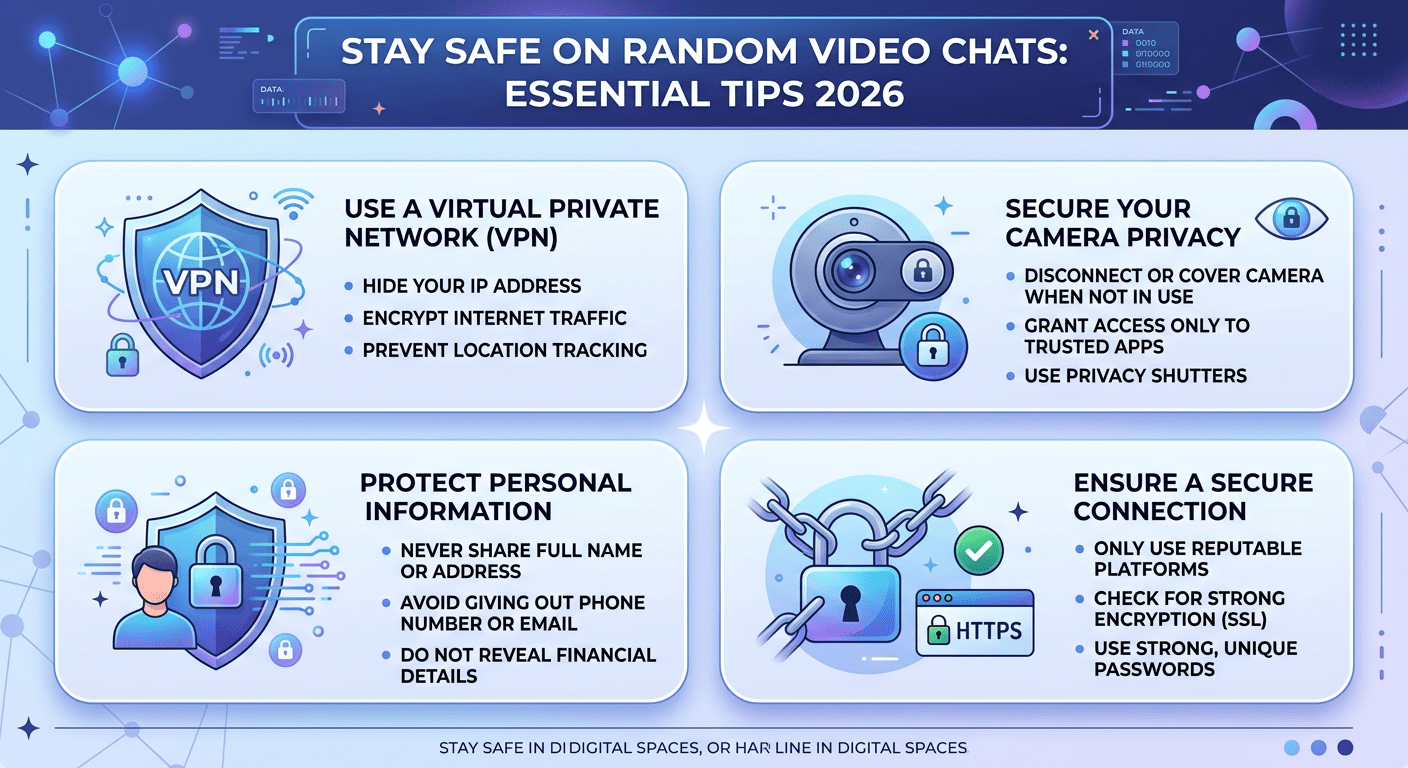
These aren’t suggestions. Treat them like the law if you want to keep your privacy intact on random chat sites.
Never Share Personal Information
This one seems obvious, right? But you’d be shocked how many people immediately start sharing their phone numbers, Instagram handles, or even their home address during a five-minute conversation.
I’ve watched it happen dozens of times. Someone connects, they hit it off, and suddenly they’re exchanging WhatsApp numbers like it’s a normal Tuesday. Bad move.
Here’s the thing: once you give out that information, you have zero control over what happens to it. That “nice guy” you talked to for fifteen minutes could turn into someone sending you unwanted messages at 3 AM. Or worse.
Keep conversations on the platform until you’ve built real trust. And even then — think twice before sharing anything that could identify you.
Use a VPN for IP Protection
I’ll admit something: I was skeptical about VPNs at first. Seemed like overkill. Then I started researching how IP addresses can be used to track users across platforms, and my opinion changed real fast.
A virtual private network masks your real IP address by routing your connection through different servers. Most random chat platforms log IP addresses — it’s how they track banned users and, unfortunately, how some bad actors identify vulnerable targets.
I’ve tested a handful of VPN services specifically for video chat use. The difference in peace of mind is substantial. When your real IP is hidden, you’re essentially anonymous on the platform. That alone is worth the monthly subscription.
Pick a VPN with a no-logging policy and servers in multiple countries. You’ll thank yourself later.
Be Careful with Your Camera Angle
This one catches a lot of people off guard. Your background reveals more than you think.
I’ve had conversations where I could see someone’s bedroom, their workplace in the background, or even photos on the wall with family names visible. That information, combined with other details, can paint a pretty complete picture of who you are.
Best practice? Position your camera to show a neutral background — a blank wall, a neutral room, anything that doesn’t give away your location or lifestyle details.
Also, watch what you’re wearing. I know it sounds ridiculous, but company logos, school names, and other identifying marks show up clearly on camera. You don’t have to be paranoid — just be aware.
Red Flags to Watch For
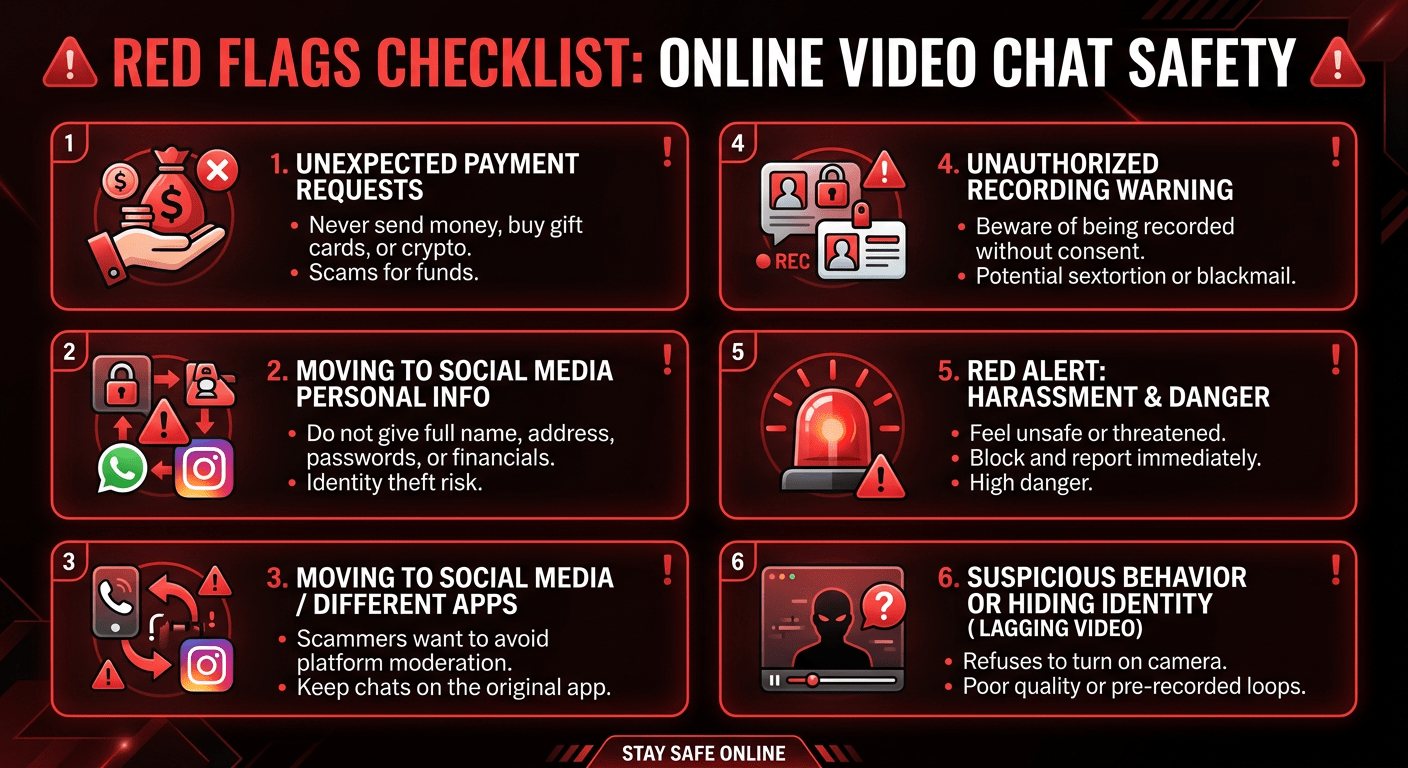
After hundreds of random chat sessions, I’ve compiled a mental list of behaviors that almost always signal trouble. If you see these, disconnect and move on.
Users Asking for Social Media
One of the most common scams starts with “Hey, can we continue this on Instagram?” They seem friendly, genuine even. But here’s the play: they want you off the platform where there’s no moderation, no record, and no way to report them.
If someone immediately pushes for another platform, that’s a red flag. Period. Legitimate people are happy to chat where you are. Scammers want you somewhere they control.
Suspicious Recording Behavior
Watch for users who keep asking you to “do something specific” or who seem overly focused on you rather than conversation. Some people are screen-recording interactions to use without consent.
If someone asks you to remove clothing, perform acts, or do anything that feels off — disconnect immediately. Don’t rationalize it, don’t give them the benefit of the doubt. These requests almost always come from bad actors.
Requests for Payment or Gifts
I’ve seen this evolve over the past year. It used to be obvious — someone claiming to be in financial trouble, asking for money via PayPal or gift cards. But scammers have gotten more sophisticated.
Now they might pose as models, claim to want to “meet up” (requiring payment for “travel expenses”), or offer “premium content” for a fee. None of this belongs on random chat platforms. If money enters the conversation, leave.
What to Do If Something Feels Wrong
Trust your gut. I can’t stress this enough.
Your instinct is there for a reason. If something feels off — even if you can’t articulate why — disconnect. You don’t owe anyone your time or attention, especially not on a platform where you’ve been randomly matched.
Most platforms have reporting systems, but I’ll be honest: they’re often slow and ineffective. Don’t rely on them to protect you in real-time. The best protection is disconnecting the moment you feel uncomfortable.
Save screenshots if something serious happens. Some platforms have poor moderation records, so having evidence can matter if you need to report to authorities later. But only do this if it’s safe to do so — don’t capture something that puts you at greater risk.
And if someone crosses a line — threats, harassment, anything illegal — consider contacting local authorities. These platforms operate globally, but your safety is a local matter.
Frequently Asked Questions
Q: Do Omegle alternatives keep records of my chats?
A: Most platforms log some data, including IP addresses and chat metadata. That’s exactly why using a VPN matters. Check each platform’s privacy policy — they vary significantly in what they collect and how long they keep it.
Q: Can someone find my location through video chat?
A: Direct location tracking through video chat alone is difficult, but combining your IP address, visible background clues, and conversation details can help someone narrow down where you are. Stay mindful of what you reveal.
Q: Should I use my real name on random chat platforms?
A: Absolutely not. Use a pseudonym or nickname at minimum. Even better — don’t use anything that could identify you across platforms. Consistency across sites makes people trackable.
Q: What’s the safest time of day to use random chat sites?
A: There’s no “safe” time that guarantees good interactions. However, later hours tend to see more problematic users. Morning and afternoon sessions usually have more casual users looking for genuine conversation.
Further Reading
- Learn more about VPN technology and privacy protection
- General online safety guidelines from security researchers
- More safety guides by alex-rivera